Fresh, elegant, and irresistibly indulgent, these Lime Meringue Tartlets are a delightful twist on a timeless pastry classic. Made with Eyguebelle Lime Syrup, they deliver vibrant citrus notes perfectly balanced by the sweetness of a light and airy Italian meringue. An ideal dessert for spring and summer gatherings, or whenever you're craving a refreshing treat.
Preparation Time: 1 hour (plus overnight resting time and 4 hours chilling)
Servings: 6 tartlets
Difficulty: Intermediate
Flavor Profile: Fresh, tangy, and indulgent
Ingredients
For the lime filling
For the pastry
- 1 egg yolk
- 40 g sugar
- 50 g unsalted butter
- 100 g flour
- 4 g baking powder
- 1 pinch of salt
For the Italian meringue
- 1 egg white
- 37 g sugar
- 12 g orange juice
- 15 ml water
Equipment
- 6 tartlet pans
- Parchment paper
- Mixing bowl
- Electric whisk
- Saucepan
- Piping bag
- Cooking thermometer
- Kitchen torch
Lime Meringue Tartlets Preparation
Preparing the pastry
- The day before, separate the egg and reserve the egg white in a covered container in the refrigerator.
- Preheat the oven to 160°C (320°F) using the fan-assisted setting.
- Whisk the egg yolk and sugar together.
- Add the softened butter and mix with a wooden spoon.
- Incorporate the flour, baking powder, and salt until a smooth dough forms.
- Shape into a ball and divide into 6 equal portions.
- Press the dough into tartlet pans lined with parchment paper.
- Bake for approximately 25 minutes and allow to cool completely.
Preparing the lime filling
- The following day, soak the gelatin sheet in cold water until softened.
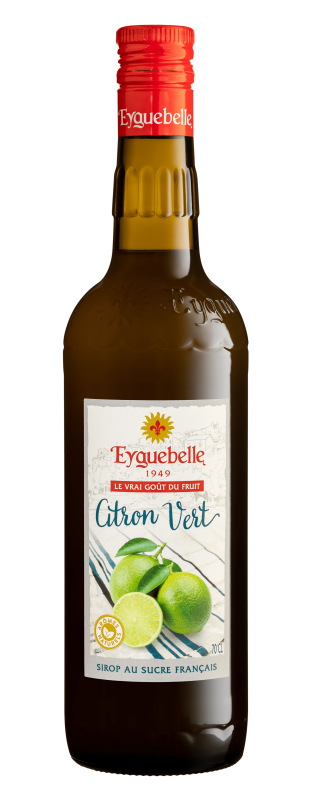
- Gently heat 50 ml of Eyguebelle Lime Syrup in a saucepan.
- Remove from the heat and stir in the drained gelatin until fully dissolved.
- Whisk the egg yolk with 25 ml of syrup, then combine with the gelatin mixture.
- In a separate bowl, whip the cream to stiff peaks and fold in the remaining 50 ml of syrup.
- Gently combine both preparations until smooth and homogeneous.
- Pipe or spoon the filling into the tartlet shells.
- Refrigerate for at least 4 hours.
Preparing the Italian meringue
- Bring the egg white to room temperature.
- In a saucepan, heat the sugar, water, and orange juice until the syrup reaches 118°C (244°F).
- Meanwhile, whisk the egg white until soft peaks form.
- Slowly pour the hot syrup over the egg white while continuing to whisk.
- Continue whisking until the meringue becomes glossy, firm, and slightly warm.
- Reserve until ready to assemble.
Assembly
- Pipe the lime filling into the tartlet shells if not already done.
- Generously top with the Italian meringue using a piping bag.
- Lightly caramelize the meringue with a kitchen torch just before serving.
The Eyguebelle Tip
One of the secrets to a perfectly balanced lime meringue tart is finding the right harmony between the bright acidity of lime and the sweetness of the meringue. If you prefer a softer, rounder flavor profile, consider adding a touch of orange zest to the filling or increasing the amount of meringue. For a more vibrant citrus experience, garnish with fresh lime zest just before serving.
This iconic dessert also lends itself to many delicious variations:
- Lime and Orange Tart, for a sweeter and fruitier citrus profile.
- Lime and Yuzu Tart, offering refined floral and exotic notes.
- Lime and Red Berry Tart, combining tangy citrus with fruity sweetness.
- Lime and Coconut Tart, inspired by tropical flavors.
- Lime and Mango Tart, bringing extra richness and exotic character.
Renowned pastry chefs have also created their own interpretations of this classic. Pierre Hermé is celebrated for his sophisticated citrus combinations, while Christophe Michalak is known for modern, texture-driven versions of traditional French desserts. Their creations showcase how versatile and timeless the lime meringue tart can be.
For a spectacular finish, torch the meringue just before serving to create a beautiful contrast between the crisp caramelized exterior and the smooth, creamy lime filling underneath.